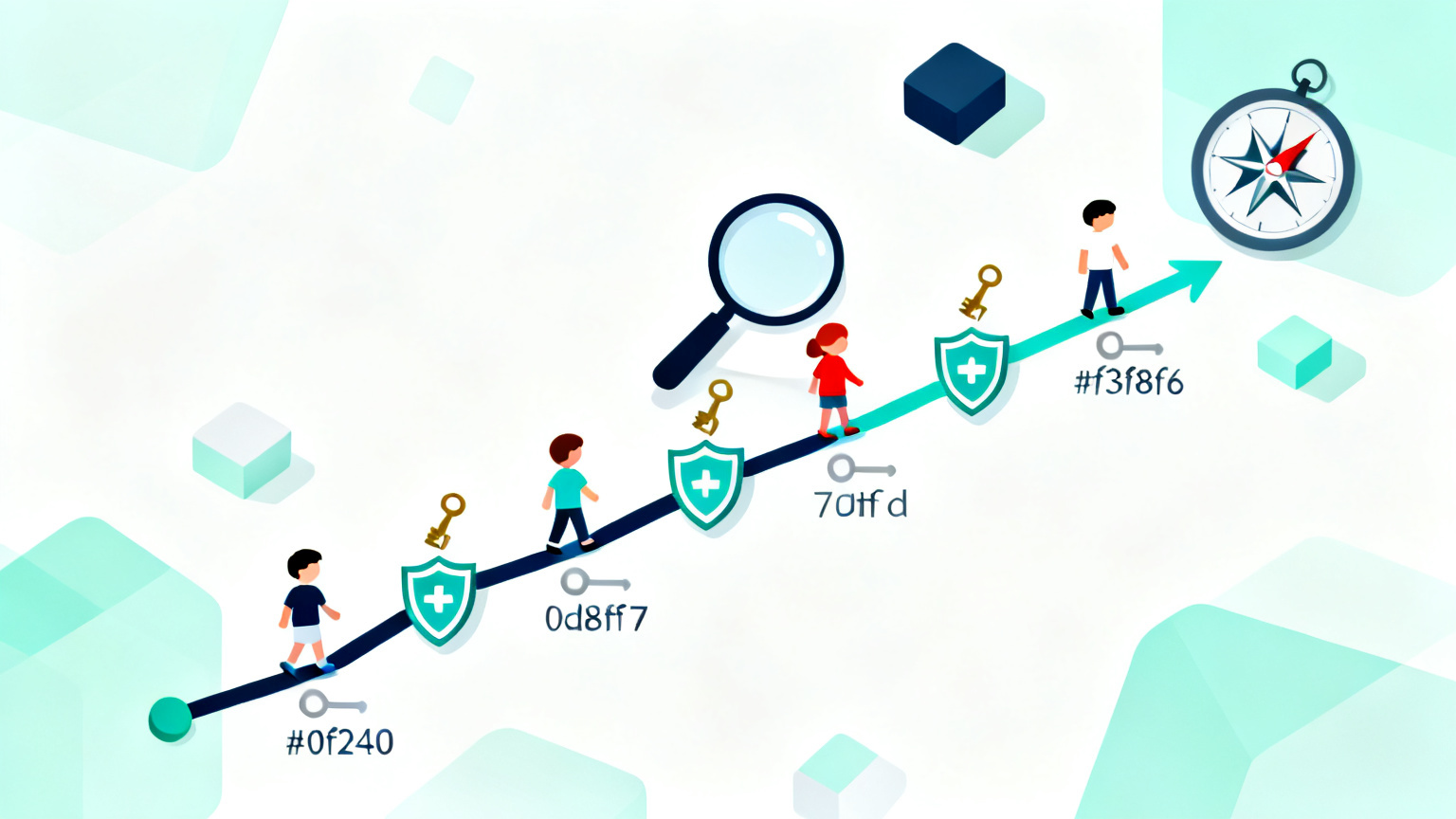
The childhood vaccine schedule, explained by the evidence
The routine schedule is not a random list. Each shot is timed to the age when the disease is most dangerous and the immune response is strong enough to work. Spreading them out does not make them safer. It just leaves children unprotected longer.
Why the timing is what it is
The schedule recommended by the CDC's Advisory Committee on Immunization Practices and the American Academy of Pediatrics gives each vaccine at the youngest age at which two things are true: the child's immune system will respond well, and the disease is a real threat. Whooping cough kills infants in the first months of life, so the DTaP series starts at two months. Measles becomes a risk once maternal antibodies fade around a year, so MMR comes at 12 to 15 months.
The number of shots looks large because the schedule protects against 16 diseases. The total amount of antigen a child receives today is a small fraction of what children received in the 1980s, because modern vaccines are far more refined.
What the safety evidence looks like
Vaccines are among the most studied products in medicine. Large majorities of Americans still say the polio and MMR vaccines are safe, and the evidence agrees: dozens of studies covering millions of children have found no link between vaccines and autism, no immune "overload", and side effects that are almost always mild and short. Serious reactions are rare, tracked in real time, and published.
The diseases are not mild. Measles hospitalizes about one in five unvaccinated children who catch it and can cause brain swelling years later. Whooping cough can stop an infant's breathing. These are the outcomes the schedule prevents.
What "delayed" or "alternative" schedules change
Alternative schedules were never tested. They rearrange the timing based on intuition, not trials. What they measurably change is the window of vulnerability: a child on a spread-out schedule spends more months unprotected against diseases that circulate in daycare, on planes, and in emergency rooms. They also mean more visits and more needle sticks, not fewer.
Pediatricians who follow the evidence do not offer alternative schedules as a default. They will discuss worries at length, and they will not treat refusal as routine.
When the schedule becomes a political football
Recent polling shows fewer than half of adults trust federal agencies to make children's vaccine recommendations free of interference, and that trust now splits sharply by party. That is a reason to look past the news to the evidence itself, which has not changed, and to the professional bodies whose recommendations are built on it: the American Academy of Pediatrics, the American Academy of Family Physicians, and their counterparts abroad, who continue to recommend the routine schedule.
How to find a pediatrician who vaccinates on schedule
Ask directly: "Do you follow the routine CDC and AAP schedule, and do you accept families who refuse vaccines?" Practices that follow the evidence answer yes to the first and usually no to the second, because unvaccinated children in the waiting room put infants at risk.
Pediatricians listed on DoctorDirectory.ai attest to giving vaccines on the routine schedule, to not offering delayed schedules by default, and to not writing non-medical exemption letters.
Common questions
Can my child get several vaccines in one visit safely?
Yes. Combination visits are studied specifically and are safe. A child's immune system handles thousands of antigens every day from ordinary life.
What if my child is behind?
There is a catch-up schedule for exactly this. Any pediatrician can put a child back on track without starting over.
Where can I read the actual schedule?
The CDC publishes the current child and adolescent schedule, and the AAP publishes a parent-friendly version. Both are linked below.
References
- Child and Adolescent Immunization Schedule by Age, CDC / ACIP
- Immunizations: recommended schedule and resources for families, American Academy of Pediatrics
- KFF Tracking Poll on Health Information and Trust: vaccine safety and trust, KFF (2025)
Why this matters
The evidence on vaccines is settled science. The question is how to find clinicians who practice from it, and how to make that easy for the next parent.
DoctorDirectory.ai is different on purpose. Every clinician is verified against the federal license registry, screened across their website, social accounts, board actions, and news, and signs a dated attestation to the major society guidelines that renews every year. Websites are re-checked monthly and listings are audited at random. Nothing a clinician or advertiser pays for changes who passes or who ranks. And there are no patient reviews to buy, bulk-post, or weaponize. That is what a vetted directory looks like, and it is what a healthcare system running low on trust needs more of.
For patients
Find the right doctor, then tell someone.
Search by condition and city. Every result is licensed, board-certified, and on record for evidence-based care. If a friend or family member is choosing a doctor, send them here before they read a single star rating. The more people who expect this standard, the more clinicians will meet it.
For clinicians and the medical community
Vetting and guardrails are how we earn trust back.
A license proves training. It does not tell a patient who sells peptides, who tells families to skip vaccines, or who quietly lost a license in another state. Directories that verify, attest, re-check, and remove are the guardrails the profession has been missing. If you practice from the evidence, put your name to it where patients can see it, and ask your colleagues to do the same.