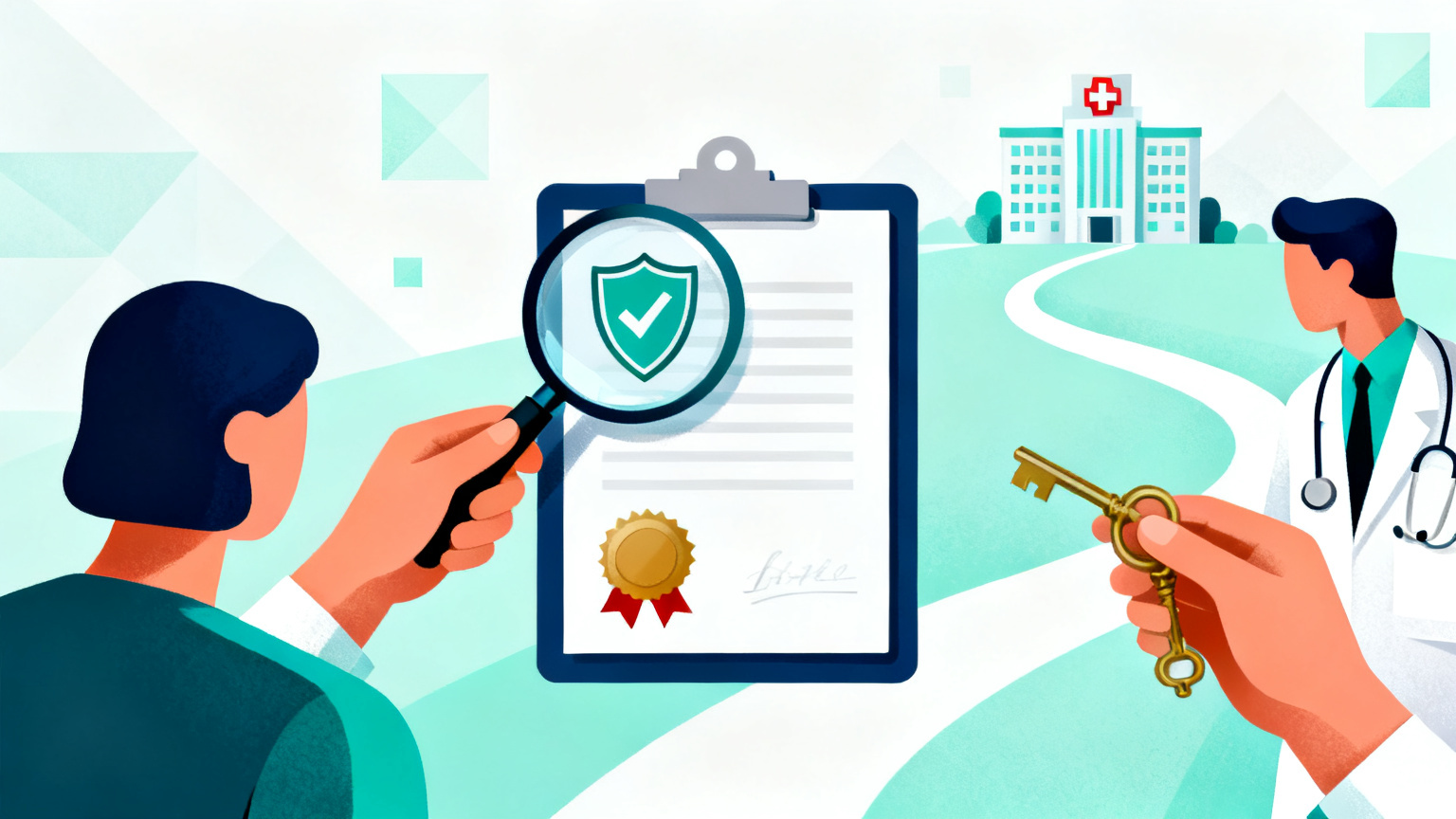
Is my doctor board certified? How to check in five minutes, and what it means
A license lets a doctor practice medicine. Board certification says they passed a rigorous exam in a specific specialty and keep it current. Here is how to check, for free, and how to read what you find.
License versus certification
A medical license is issued by a state. It confirms the doctor finished medical school, passed the national licensing exams, and completed at least some residency training. It lets them practice any kind of medicine, legally.
Board certification is issued by a specialty board and is voluntary. It confirms the doctor completed a full residency in that specialty, passed a demanding written and sometimes oral exam, and keeps up with continuing certification requirements. About 85% of licensed US physicians hold at least one board certification.
How to check
- Go to certificationmatters.org, the free lookup run by the American Board of Medical Specialties. Enter the name and state. No account needed.
- If nothing comes up and the doctor is a DO, check the American Osteopathic Association's certification lookup as well; DOs can certify through either system.
- Read the specialty and the status. "Certified" with a current date is what you want. "Not meeting requirements" or an expired date means they have lapsed.
- Match the specialty to your need. Board certification in one field says nothing about another.
What the confusing terms mean
- Board eligible: finished residency but has not passed the exam yet, or has not taken it. Common for new graduates; a concern after several years.
- Double board certified: certified in two specialties, for example internal medicine and cardiology. Cardiologists, endocrinologists, and other subspecialists are almost always double certified because their subspecialty requires the base one.
- Lifetime certification: older certificates issued before about 1990 in some specialties never expire. Newer ones require ongoing recertification.
- "Board certified" by a board you have never heard of: check that the board is a member of ABMS or AOA. Some organizations sell certificates in "anti-aging" or "functional" medicine that have no such standing.
Why it matters for your care
Certification is the closest thing medicine has to a standardized quality floor. Studies link it to better adherence to guidelines and fewer disciplinary actions. It is not a guarantee, but it is far more predictive than a review score, and it is free to verify.
On DoctorDirectory.ai, board certifications are recorded on every profile, and listed clinicians confirm them as part of their annual attestation.
Common questions
Can a doctor lose board certification?
Yes. Certification lapses if the doctor does not meet continuing certification requirements, and boards can revoke it for disciplinary reasons. Check the status date.
Is a non-certified doctor bad?
Not necessarily. Some excellent physicians in rural or academic settings let certification lapse. But it removes an independent check, so you should look harder at the other signals.
What about nurse practitioners and physician assistants?
NPs are certified by nursing boards such as the AANP or ANCC; PAs by the NCCPA. Both are real credentials with their own lookups.
References
- Certification Matters lookup, American Board of Medical Specialties
- AOA board certification verification, American Osteopathic Association
Why this matters
You now know how to check a doctor yourself. We built a directory that does every one of those checks before a name appears.
DoctorDirectory.ai is different on purpose. Every clinician is verified against the federal license registry, screened across their website, social accounts, board actions, and news, and signs a dated attestation to the major society guidelines that renews every year. Websites are re-checked monthly and listings are audited at random. Nothing a clinician or advertiser pays for changes who passes or who ranks. And there are no patient reviews to buy, bulk-post, or weaponize. That is what a vetted directory looks like, and it is what a healthcare system running low on trust needs more of.
For patients
Find the right doctor, then tell someone.
Search by condition and city. Every result is licensed, board-certified, and on record for evidence-based care. If a friend or family member is choosing a doctor, send them here before they read a single star rating. The more people who expect this standard, the more clinicians will meet it.
For clinicians and the medical community
Vetting and guardrails are how we earn trust back.
A license proves training. It does not tell a patient who sells peptides, who tells families to skip vaccines, or who quietly lost a license in another state. Directories that verify, attest, re-check, and remove are the guardrails the profession has been missing. If you practice from the evidence, put your name to it where patients can see it, and ask your colleagues to do the same.