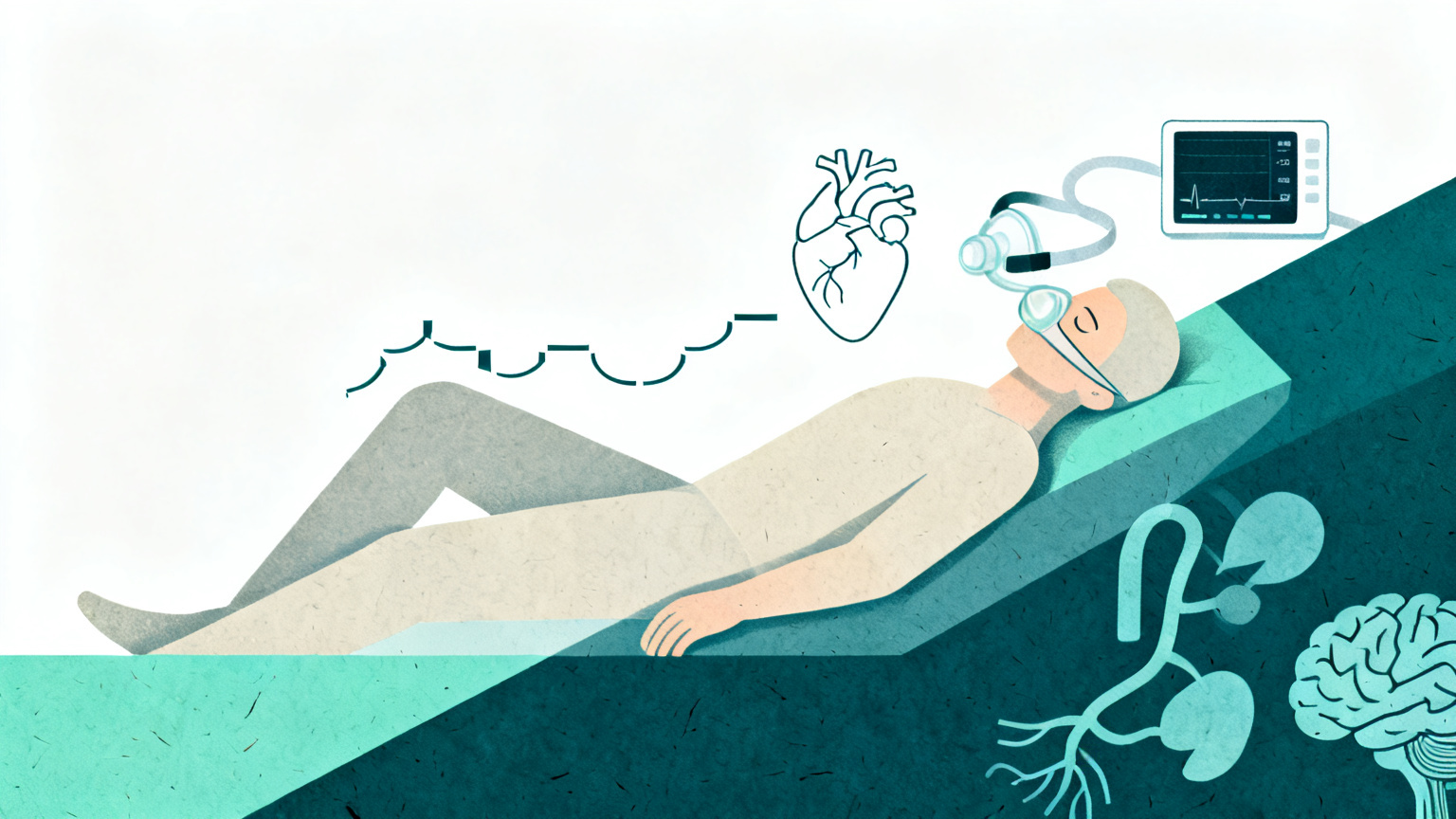
What sleep apnea is
Obstructive sleep apnea (OSA), the common form, happens when the muscles in the throat relax during sleep and repeatedly block the airway, causing breathing to stop and restart, sometimes dozens or hundreds of times a night. Each pause briefly drops blood oxygen and triggers a partial awakening, which is why people with untreated apnea rarely feel rested even after a full night in bed.
The symptoms that point to sleep apnea
- Loud, chronic snoring, often noticed by a partner before the person with apnea notices anything
- Witnessed pauses in breathing during sleep
- Waking up gasping or choking
- Morning headaches
- Excessive daytime sleepiness, even after 7 to 8 hours in bed
- Difficulty concentrating, irritability, or mood changes
- Waking up to urinate multiple times a night
Not everyone with sleep apnea snores loudly, and not everyone who snores has sleep apnea; a sleep study is the only way to know for certain.
Why untreated apnea is a cardiovascular problem, not just a sleep problem
Each apnea episode causes a spike in blood pressure and a surge of stress hormones. Repeated nightly for years, this pattern is strongly linked to treatment-resistant high blood pressure, atrial fibrillation, heart failure, and stroke. Sleep apnea is one of the more common, and more treatable, causes of blood pressure that will not come down despite multiple medications, which is why it is worth ruling out if that describes you.
What guideline-based treatment looks like
Diagnosis is made with a sleep study, either in a lab or, for many people, a validated home sleep test. CPAP (continuous positive airway pressure), a mask worn during sleep that keeps the airway open with gentle air pressure, remains the most effective treatment and the one with the strongest evidence for lowering blood pressure and cardiovascular risk. For people who cannot tolerate CPAP, options include an oral appliance that repositions the jaw, positional therapy for apnea that only happens on your back, and, for appropriate candidates, surgery or a newer hypoglossal nerve stimulator implant. Weight loss, when relevant, also reduces severity. A good clinician rechecks whether your treatment is actually being used and actually working, not just whether it was prescribed.
Finding a doctor who treats sleep apnea
Search our sleep medicine specialists list, or a cardiologist if apnea is complicating your blood pressure or heart rhythm. Every listing is license-verified, board-certified, and on record for guideline-based care. Search near you by specialty and city.
Common questions
Can sleep apnea cause high blood pressure?
Yes. Repeated overnight oxygen drops and stress hormone surges from untreated apnea are a well-documented, treatable cause of high blood pressure, including blood pressure that resists multiple medications.
Do I need a sleep lab study, or can I use a home test?
Many adults with a straightforward presentation can be diagnosed with a home sleep apnea test. More complex cases, or suspected conditions beyond OSA, may need an in-lab study. Your clinician decides based on your history.
References
- AASM Clinical Practice Guideline for Diagnostic Testing for Adult Obstructive Sleep Apnea (AASM)