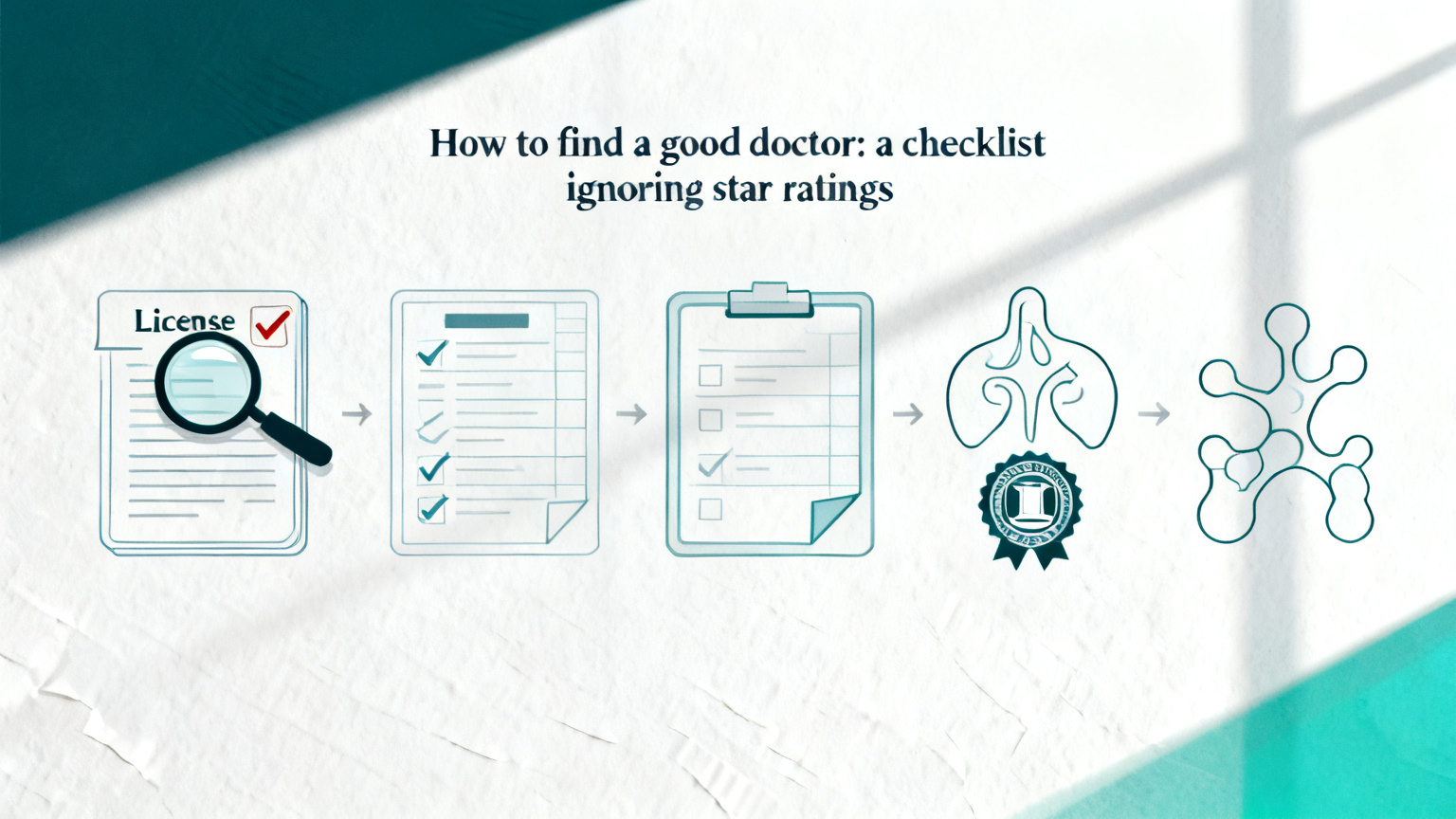
Overview
Learning how to verify a doctor's medical license online takes only a few minutes, and it costs nothing. Every state medical board maintains public records that show whether a physician's license is active, expired, or under discipline. Before you hand over your health history, it is worth confirming that the credential on the wall or listed on a practice website reflects the doctor's current legal standing, not just their reputation.
A medical license is issued by a state medical board and confirms that a physician completed medical school, passed the required national licensing exams, and finished at least some residency training. It is the basic legal permission to practice medicine. Board certification is a separate, voluntary credential that comes later and confirms additional specialty training. Both are useful to know, but license verification comes first because it answers a more fundamental question: is this person currently allowed to practice medicine, without restriction, right now.
Why checking the license matters more than a star rating
Most people pick a doctor based on proximity, insurance coverage, or a recommendation from someone they trust. None of that reveals whether a license is active or whether a board has taken disciplinary action. Board actions for prescribing violations, boundary violations, or substance use issues are public record. They show up in a license lookup even if they never appeared in a local news story or affected a doctor's online reviews. A physician can have a page full of glowing reviews and a suspended or restricted license at the same time. Verifying the license first means you are screening for safety before you screen for convenience.
Steps to verify a doctor's medical license online
The process is nearly identical no matter where you live, because every state runs some version of the same public lookup tool.
- Start with the doctor's full name as it appears on their practice website or appointment confirmation, and note the state where they are licensed to practice.
- Search DocInfo.org, a free tool run by the Federation of State Medical Boards, which searches many states at once from a single search box. This is especially useful if you are not sure which state issued the license.
- If you already know the state, you can also go directly to that state's medical board website and use its license lookup tool, which typically asks only for the doctor's first and last name.
- Review the record that comes back. It should show the license status, the issue and expiration dates, and whether any board actions or restrictions are listed.
The record itself is usually easy to read. A status of active and unrestricted means the license is current and the doctor is legally permitted to practice without limitation. Anything else, including terms like probation, suspended, or restricted, deserves a closer look before you book an appointment.
What to do with what you find
If the license is active and clean, you have confirmed the most basic and important fact about a physician: they are legally allowed to practice medicine right now. That does not mean your search is over. Board certification, which you can typically verify through the relevant specialty board, tells you whether a physician has completed additional training in a specific area like cardiology, endocrinology, or family medicine. Malpractice history and court records, where publicly available, can add further context. But license verification is the foundation, and it is the step most patients skip entirely.
If you find a restriction, a lapsed license, or a board action, that is not automatically disqualifying on its own, since some restrictions are administrative and some board actions are old and resolved. But it is a signal to ask questions directly, either by contacting the practice or by looking into the details of the board action, which are usually described in the public record itself.
Why this check belongs before every other filter
Reviews are useful for logistics: how long the wait times are, whether the front desk returns calls, whether parking is easy. They are not evidence of clinical quality, and they should never be the deciding factor in choosing a physician. A confident, well-reviewed doctor can still be practicing outside evidence-based guidelines, and a license lookup will not catch every red flag, such as a doctor who promotes unproven supplements or cure-all programs on social media. But it will catch the most serious and objective problems: an expired license, a suspension, or a documented disciplinary action.
Related Reading from DoctorDirectory.ai
How DoctorDirectory.ai builds on this step
At DoctorDirectory.ai, license verification is the first of several checks every listed physician must pass before appearing in the directory. We confirm the license against the national registry, record board certifications, and require a signed, dated attestation to guideline-based care that renews annually. We also screen for public red flags, such as promotion of unproven treatments, that a license lookup alone would never reveal. The result is a directory where the groundwork of verification has already been done, so you can spend your time evaluating fit and communication style instead of chasing down public records on your own.
Whether you use our directory or check a license yourself using a state board's lookup tool, the habit is the same: confirm the credential before you commit to the appointment. It takes a few minutes, and it is the single most reliable filter available before you ever sit down in an exam room.