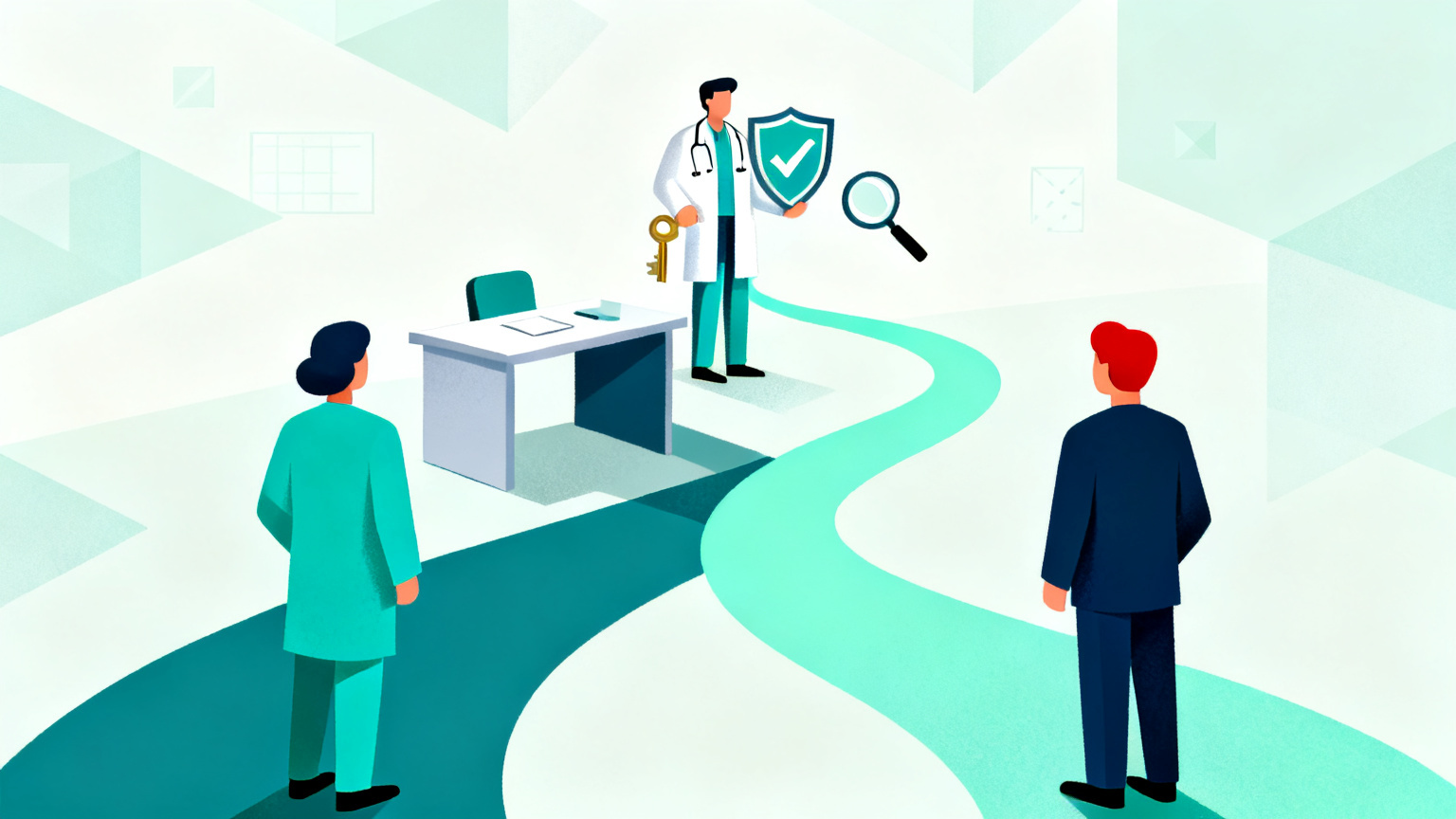
What evidence-based medicine means, and how to tell if your doctor practices it
The phrase gets used as a slogan by people who mean the opposite. The real definition, from the doctors who coined it, has three parts, and a clinician who honors all three is easy to recognize once you know what to look for.
The definition, from the people who wrote it
In 1996 David Sackett and colleagues defined evidence-based medicine as "the conscientious, explicit, and judicious use of current best evidence in making decisions about the care of individual patients," integrated with the clinician's expertise and the patient's values. Three parts, all required. Evidence without judgment is a cookbook. Judgment without evidence is a guess. Either without your values is not your care.
Not all evidence is equal
Evidence comes in levels. At the top: systematic reviews of randomized trials, then individual large randomized trials, then cohort and case-control studies, then case series, and at the bottom, expert opinion and mechanism ("it should work because"). Guidelines grade each recommendation by where its evidence sits.
Most health misinformation lives at the bottom of that ladder while borrowing the language of the top. "Studies show" usually means one small study, a mouse, or a mechanism. Ask for the trial.
Six signs your doctor practices it
- They can name the guideline and the year for your condition.
- They tell you how strong the evidence is: "this is well established" versus "this is reasonable but the data are thin."
- They change their mind when new trials come out, and say so.
- They give you the numbers: absolute risk, not just "it lowers your risk."
- They ask what matters to you before deciding.
- They do not sell what they prescribe.
The counterfeits
- "I follow the evidence, not the guidelines." Guidelines are the summary of the evidence, written by people who read all of it. A clinician who rejects them wholesale is usually substituting their own preference.
- "Root cause" and "optimization" medicine that sells testing panels, supplements, and hormones to healthy people.
- Testimonials in place of trials.
- Certainty. Real evidence comes with confidence intervals; salespeople do not.
Why this directory asks about it
Every clinician listed here signs an attestation naming the guidelines they follow for each condition they treat, and answers a short questionnaire about first-line therapies and the targets they track. It is not a test of whether they agree with every line. It is a test of whether they start from the evidence and can say so out loud.
Common questions
Can evidence-based medicine be wrong?
Yes, and it says so. Recommendations change when better trials arrive: hormone therapy, aspirin for prevention, and tight glucose targets have all been revised. That correction is the feature.
Is 'alternative medicine' ever evidence-based?
Anything that has been tested and shown to work stops being alternative and becomes medicine. What remains under the alternative label is what failed testing or was never tested.
References
- Evidence based medicine: what it is and what it isn't, BMJ (1996)
- GRADE handbook: grading the quality of evidence and strength of recommendations, GRADE Working Group
Why this matters
Trust in medicine is not rebuilt by louder voices. It is rebuilt one verified clinician at a time, in public, with the receipts showing.
DoctorDirectory.ai is different on purpose. Every clinician is verified against the federal license registry, screened across their website, social accounts, board actions, and news, and signs a dated attestation to the major society guidelines that renews every year. Websites are re-checked monthly and listings are audited at random. Nothing a clinician or advertiser pays for changes who passes or who ranks. And there are no patient reviews to buy, bulk-post, or weaponize. That is what a vetted directory looks like, and it is what a healthcare system running low on trust needs more of.
For patients
Find the right doctor, then tell someone.
Search by condition and city. Every result is licensed, board-certified, and on record for evidence-based care. If a friend or family member is choosing a doctor, send them here before they read a single star rating. The more people who expect this standard, the more clinicians will meet it.
For clinicians and the medical community
Vetting and guardrails are how we earn trust back.
A license proves training. It does not tell a patient who sells peptides, who tells families to skip vaccines, or who quietly lost a license in another state. Directories that verify, attest, re-check, and remove are the guardrails the profession has been missing. If you practice from the evidence, put your name to it where patients can see it, and ask your colleagues to do the same.